Can you walk with wine in Fredericksburg? Here is what is actually verified
Texas has no statewide public-drinking ban and no Fredericksburg ordinance surfaces officially. Here is what the statutes really say, and who decides on the ground.
 By Robert Schneider, Fredericksburg wine tour specialist & Hill Country experience guide
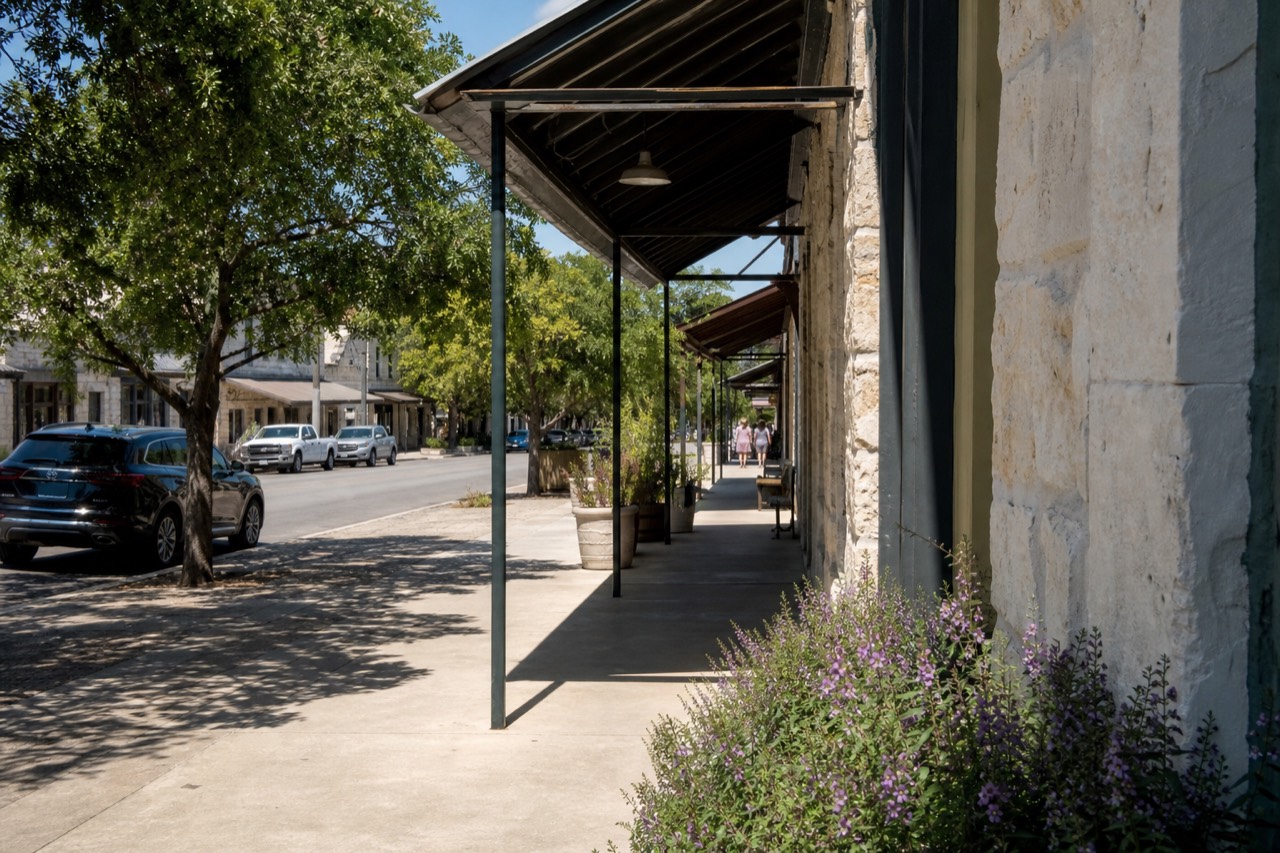
Search this question and you will get a wall of confident answers. Some say yes, stroll Main Street with your glass. Some say absolutely not, you will be cited. Click through to the source on either one and it evaporates: a blog quoting a blog, a forum post from 2019, an AI summary of both. I went looking for the actual ordinance and could not find one on the city's own site or in its published code.
So this article does something slightly unusual. Instead of picking a side, it separates what is on the public record from what is not, because the verifiable half turns out to be more useful than the guess. And the verifiable half explains something most visitors never think about: why you can legally hold an open glass on a chartered wine shuttle rolling down US 290 and not in your own car on the same stretch of road.
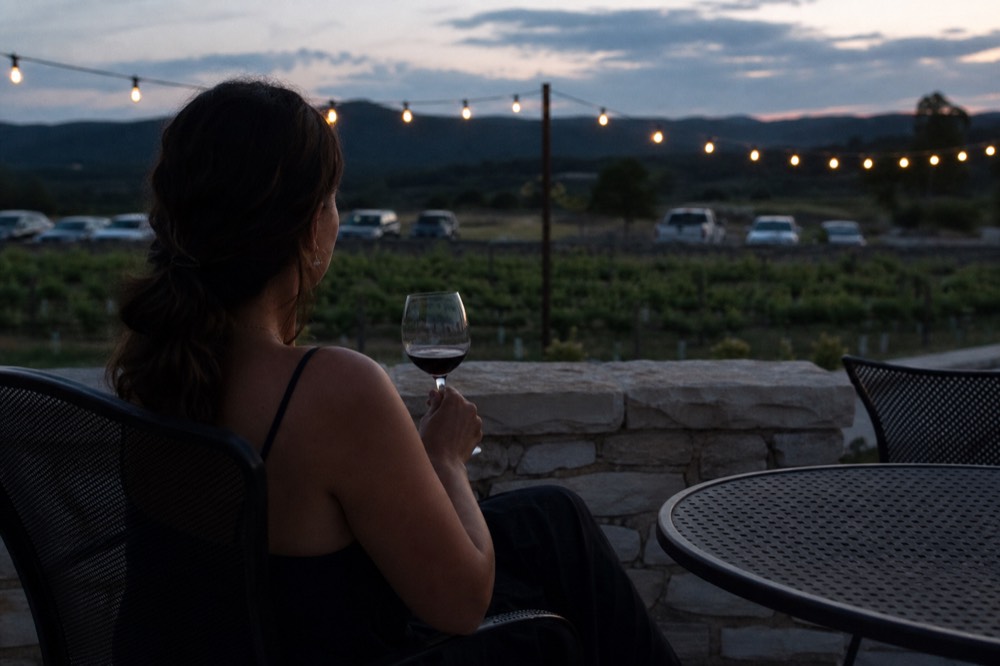
Price examples and review counts below were recorded in August 2026. Use a current quote, with all extras included, for your own comparison.
Three winery tastings, lunch and transport in one ticket. Explore Three wineries & lunch
Can you walk around Fredericksburg with a glass of wine?
No official source settles it either way. Texas has no statewide ban on drinking in public, and no City of Fredericksburg ordinance on downtown open containers surfaces in the city's published code or on its website. What actually governs your glass on any given afternoon is the property you are standing on and the event you are standing in.
That is an unsatisfying answer and it is the honest one. There is a real difference between "the law permits this" and "no law was found," and travel content routinely collapses the two. The absence of a discoverable ordinance is not the same thing as a published permission, and anyone telling you otherwise is filling a gap with confidence rather than a citation.
What replaces the missing rule in practice is a stack of private decisions. A tasting room operates under its own premise permissions and can decide whether wine leaves its door. A shop on Main Street can decide whether a glass comes through it. A ticketed festival in Marktplatz sets its own boundary and its own cup rules for the day, and those rules can differ from the shop next door and from the same festival last year.
So the practical instruction is short. Ask the person who poured it. "Can I take this outside, and how far?" gets you a precise, current, authoritative answer for that specific property in about five seconds, from someone whose license depends on knowing. That beats every article on the internet, including this one.
What does Texas law actually say about open containers?
Texas Penal Code 49.031(b) makes it an offense to knowingly possess an open container of alcohol in the passenger area of a motor vehicle on a public highway. The statute is about vehicles, not sidewalks. There is no companion statewide provision banning drinking in public generally, which is why the pedestrian question falls to local rules and private property.
Read the section and the framing becomes obvious. Chapter 49 of the Penal Code is titled around intoxication and alcoholic beverage offenses, and 49.031 sits inside it as a vehicle rule: the passenger area, a public highway, an open container. It is a driving-safety provision, not a public-decorum provision. You can read the full text at the Texas Penal Code Chapter 49 on the state's own statute site.
The trunk matters. Under the same section, a container in a locked glove compartment, in a trunk, or behind the last upright seat of a vehicle without a trunk is not in the passenger area. This is the practical rule for anyone driving home from a winery with three bottles and one that got opened at a picnic table. Sealed bottles are not open containers. The one you uncorked is, and it rides in the back.
The other half of Chapter 49 is the one people underestimate. Section 49.04, read with the definition in 49.01(2)(B), makes a person legally intoxicated at an alcohol concentration of 0.08 while operating a motor vehicle in a public place. That number applies no matter how small the pours were, how much you dumped, or how good the schnitzel was at lunch. A three-room tasting day is typically twelve to fifteen pours, and no one should be estimating their own concentration at the end of it.
Why can passengers drink on a wine shuttle but not in a friend's car?
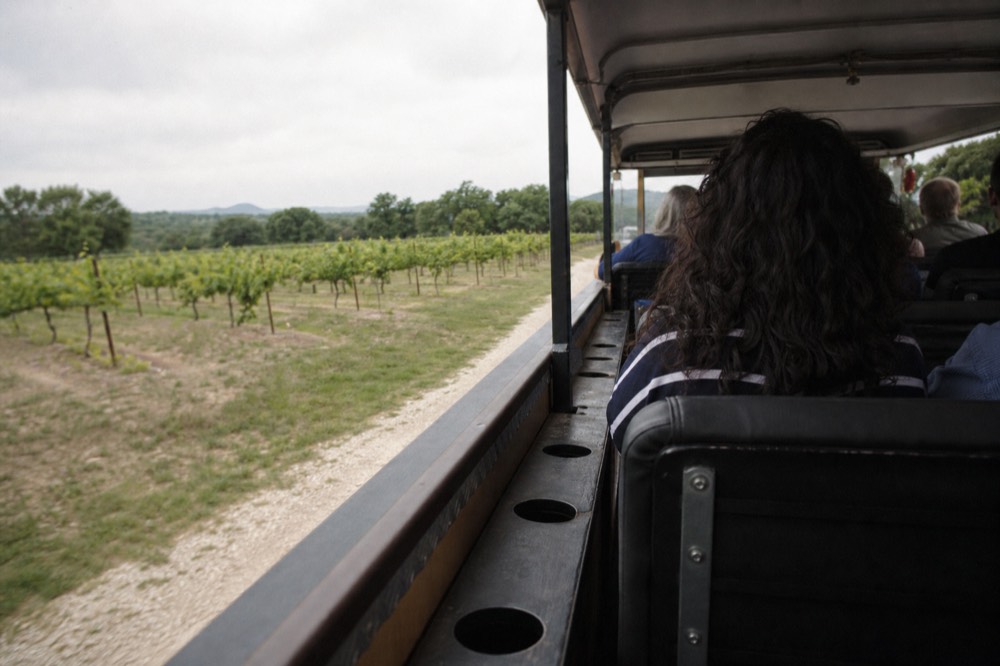
Because Penal Code 49.031(c)(1) writes the exception in plainly. The open-container offense does not apply to a passenger of "a motor vehicle designed, maintained, or used primarily for the transportation of persons for compensation, including a bus, taxicab, or limousine." A chartered wine shuttle with a paid driver fits that description. A private SUV does not, however careful everyone in it is being.
This one line of statute is the legal foundation of the entire Fredericksburg wine-tour industry, and I would guess fewer than one passenger in fifty could name it. It is the reason a stretched limousine can hand you a glass between stops, the reason an open-air cable car can run the corridor as a moving tasting room, and the reason the vehicle you booked is categorically different from carpooling with friends.
The distinction is not about the shape of the vehicle. It is about what the vehicle is used for: transportation of persons for compensation. Your neighbor's twelve-seat van is a van. A licensed operator's twelve-seat van running paid tours is inside the exception. That is also why "we hired a driver for the day" and "we booked a tour" are not always the same thing legally, and why it is worth booking with an operator that does this as its business.
Two more things the exception does not do. It does not touch the driver, who is subject to 49.04 like everyone else on the road. And it does not create any right to carry that glass off the vehicle and down a sidewalk. The exception is about the passenger area of a vehicle, full stop.
If the driving question is the reason you are reading this, the simplest fix is to stop being the driver. The all-inclusive five-hour day covers three wineries, every tasting and lunch, and you can check the current price and dates before you commit. The tours that bundle every fee are grouped together if you want to compare formats first.
Who sets the rules inside a tasting room?
The winery does, under a Texas winery permit. Chapter 16 of the Alcoholic Beverage Code lets a permit holder sell wine for consumption on and off the premises and run paid samplings on site, under sections 16.07 and 16.10. That permit comes with premise conditions, so what happens at the door of a tasting room is the winery's call, made under rules administered by the state.
This is the layer most visitors never see, and it explains a lot of otherwise confusing behavior. Why one room will pour you a full glass to carry to the lawn and another insists the glass stays on the terrace. Why a property lets a bottle be opened at a picnic table on its grounds but not carried to the parking lot. Those are premise decisions made by a permit holder who has a real regulatory reason to be careful, not arbitrary fussiness.
The state body behind all of it is the Texas Alcoholic Beverage Commission, which administers the permits and the age rules. Twenty-one is the drinking age in Texas and Chapter 106 of the Alcoholic Beverage Code covers minors and alcohol. Every adult holding a glass at the bar can expect to show ID, and no amount of local tradition changes that number.
Events add yet another layer. A ticketed festival on public ground operates under its own arrangements for the day, which is why a wristband and a marked cup at one October weekend tell you nothing about what is allowed on a random Tuesday. When a friend tells you they walked Main Street with a glass last fall, the most likely explanation is that they were inside an event footprint that permitted it.
Because each room sets its own fee as well as its own premise rules, the cheapest tickets are the ones that leave the bar tab to you. The stretched Lincoln runs five hours to Barons Creek, Blumenthal and Texas Wine Collective at $99 per person with tastings paid at each stop, and you can see the current dates and what is included before booking. It is non-refundable, so pick the date carefully.
What can you rely on, and what should you never assume?
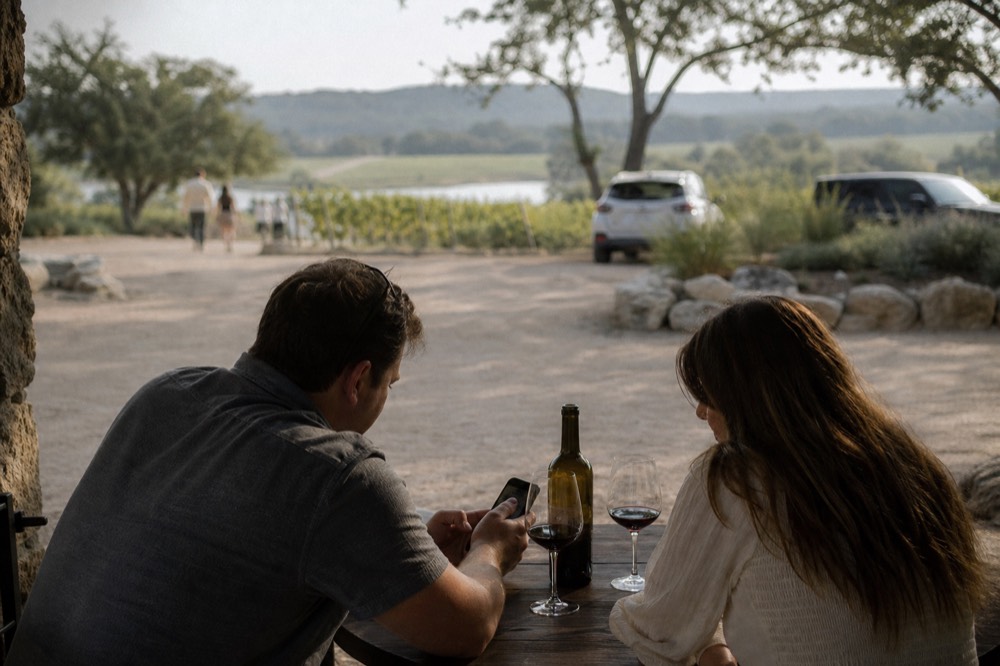
Rely on four things: the drinking age is 21, a driver is intoxicated at 0.08, an open container is banned in a vehicle's passenger area, and passengers of a bus, taxicab or limousine operated for compensation are excepted from that ban. Assume nothing about sidewalks, and never treat a travel blog's confident yes or no as a legal opinion.
Sorting the question this way is more useful than a verdict, because it tells you where to put your attention. The verified items are all things you can plan around in advance. The unverified item is something you resolve on the spot with one question to a staff member, at zero cost, with a better answer than any research could give you.
| The question | Status on official sources | What it means for your day |
|---|---|---|
| Walking Main Street with a glass | No city ordinance found either way | Ask the room that poured it, and the event if there is one |
| Drinking in public generally in Texas | No statewide ban | Local rules and private property govern instead |
| Open container in a car's passenger area | Banned, Penal Code 49.031(b) | Opened bottles ride in the trunk on the way home |
| Open container for a shuttle or limo passenger | Excepted, Penal Code 49.031(c)(1) | Legal to drink aboard a chartered tour vehicle |
| Driver's limit | 0.08, Penal Code 49.04 with 49.01(2)(B) | The pour size and the sandwich do not change it |
| Minimum age to drink | 21, TABC and Alcoholic Beverage Code Ch. 106 | Bring ID to the bar |
| Wineries selling and pouring | Alcoholic Beverage Code Ch. 16, Secs. 16.07 and 16.10 | Premise rules are the winery's to set |
How do you plan a tasting day that never lands in the grey area?
Put a paid driver between you and the question. Once you are a passenger on a chartered vehicle, the open-container exception in 49.031(c)(1) covers you, a sober professional handles the driving, and the only remaining rules are the ones each winery sets on its own ground, which staff will tell you on request.
There is a practical version of this that costs nothing to arrange. Book the vehicle first and the wineries second, because the vehicle decision is the one that changes your legal position for the whole day. Tickets on this site start at $99 per person for a stretched-limo seat where tastings are paid at each bar, and the bundled days that include every fee and lunch sit between $149 and $325. What a full tasting day actually costs compares them line by line, and the tasting-room how-to covers fees, flights and etiquette once you are at the bar.
Two habits make the rest of it easy. First, buy your bottles at the last stop rather than the first, since Fredericksburg summers run into the low 90s and a car parked in July is not a cellar. Second, if you are driving yourself anyway, decide who the designated driver is before the first pour, not after the second room, and make the choice out loud so nobody is quietly hoping someone else volunteers.
And a small piece of etiquette that sidesteps this whole article. If you want to sit outside with a full glass and a view, do it on the winery's own terrace, where the answer is unambiguous and the view is usually better than Main Street anyway. That is what the properties along the corridor are built for, and it is what most of the wine tour formats on this site are designed to give you time for.
Your next step
Choose a date for Three wineries & lunch
Starting recommendation · confirm the details for your party
Find the format for your day · compare options
The starting recommendation is general guidance. Compare a format, then check your starting point, time and party. All listed tours operate in English; confirm specific access needs with the operator.
Choose any details to narrow the options. Prices and availability are confirmed with the provider.
Other formats in this comparison
- Private Hill Country Sprinter: Your own driver and vehicle for a customizable winery, brewery or distillery route. City-limits pickup; up to 11 guests. Tastings and drinks extra. Optional lunch adds cost and one hour; request at least 2 days ahead. Confirm specific stops before booking. Free cancellation at least 24 hours before departure; check the booking terms.
- Cowboy three-winery bus: Four hours, three wineries and four to five tastings at each stop. Fredericksburg Visitor Center rear lot. Tastings, light snacks and water included; meals extra. Adult wine experience; check the date and party on GetYourGuide.
Compare your full-day costs
Use current quotes for the same party. Include tasting fees, meals, transport and required extras in both totals. This compares your figures, not a supplier quote.
Check your date before arranging the rest of your day. Three winery tastings, lunch and transport in one ticket.
Marktplatz meeting point; pickup within 2 miles of downtown by arrangement. Vehicle may be an open cable car, limo bus or van. Up to 6 per online booking; larger parties must arrange with the operator. Free cancellation at least 24 hours before departure; check the booking terms.
Scheduled dates load automatically. Availability and final price are confirmed on Viator.