What is the 20 minute wine rule?
There is no single 20 minute wine rule. Here is what the guidance actually says, the real serving temperature ranges, and why Texas heat rewrites all of it.
 By Robert Schneider, Fredericksburg wine tour specialist & Hill Country experience guide
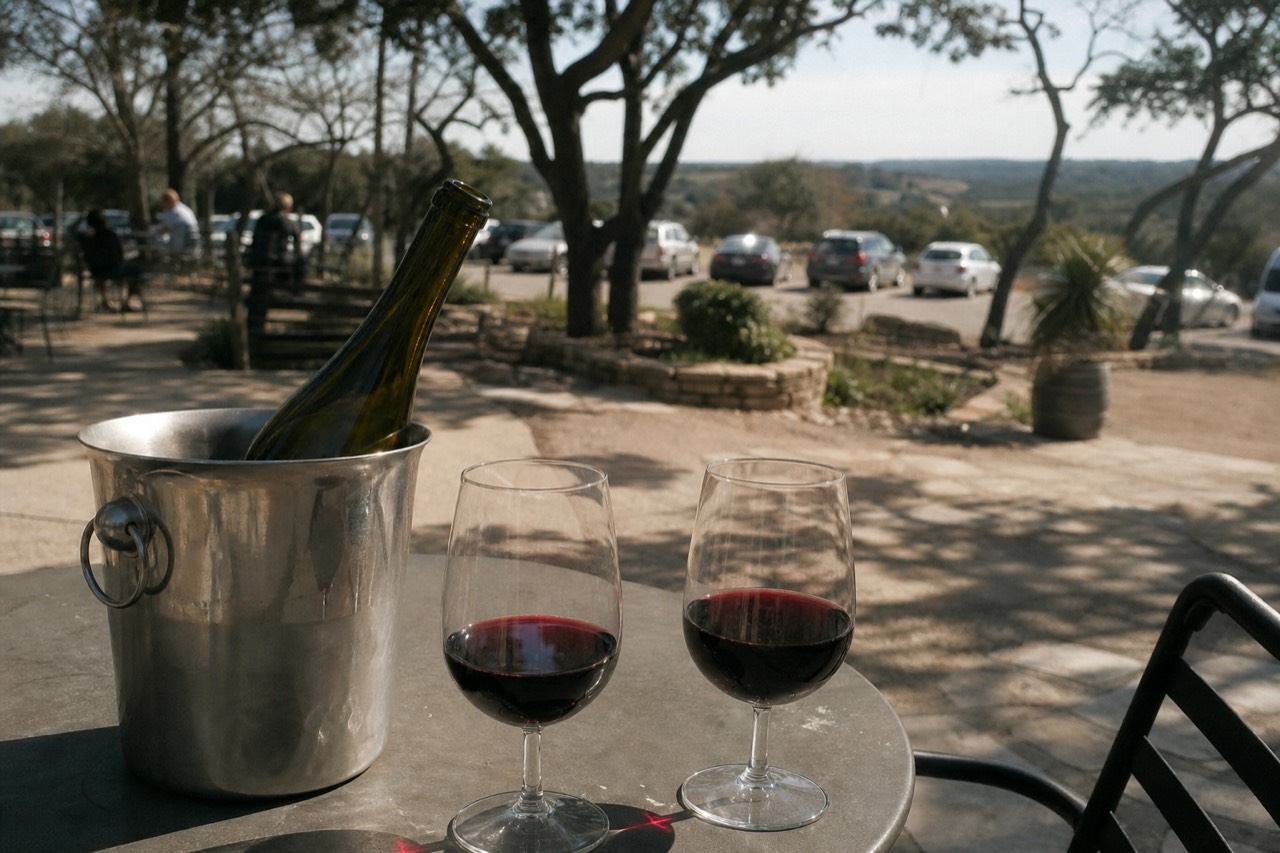
Ask five wine people about the twenty minute rule and you will get at least two different rules and one raised eyebrow. That is not because anybody is wrong. It is because the phrase was never a standard in the first place. It is shorthand that got repeated until it sounded official, and the version you heard depends entirely on whether the person who told you drinks mostly red or mostly white.
Here is what the guidance actually says, what the temperature targets underneath it are, and why the whole thing needs rethinking the moment you are standing on a limestone patio in Gillespie County in July.
Price examples and review counts below were recorded in August 2026. Use a current quote, with all extras included, for your own comparison.
Three boutique winery visits with tastings and lunch. Explore Boutique winery day
What is the 20 minute wine rule?
The 20 minute rule is a rule of thumb, not a standard. In its most common form it says to put a bottle of red into the fridge for roughly 20 to 30 minutes before serving, because most rooms are warmer than red wine wants to be. A second version says to take a white out of the fridge about 15 to 30 minutes before pouring.
Both versions exist because both correct the same underlying error. "Room temperature" as a serving instruction dates from rooms that were considerably cooler than a modern house, and refrigerators are set well below any wine's ideal serving range. So reds routinely arrive too warm and whites routinely arrive too cold, and twenty minutes in the opposite direction fixes a large part of it.
What matters is that no major wine reference has standardized a single "20 minute rule" that all the others agree on. The published guidance moves between about 15 and 60 minutes depending on the wine, the starting temperature and how the bottle is being cooled. Anyone who quotes you one number for all wine is repeating a slogan.
| The rule as you will hear it | What it actually says | How standard is it |
|---|---|---|
| The 20 minute rule (reds) | Chill a red for about 20 to 30 minutes before serving | A widely repeated rule of thumb, not a published standard |
| The 20 minute rule (whites) | Take a white out of the fridge about 15 to 30 minutes ahead | Same guidance, opposite direction, equally informal |
| The 30 minute rule | The same idea with a longer window, usually for full-bodied reds | Also a rule of thumb; the ranges overlap the 20 minute version |
| The real target | Hit a serving temperature range, whatever the clock says | This part is genuinely consistent across references |
What is the 30 minute rule, and how is it different?
Barely at all. The 30 minute version applies the same correction with a longer window, most often to full-bodied reds coming out of a cold cellar or going into a warm room. Since the published windows run from 15 to 60 minutes depending on the wine, the two rules are the same idea at different points on one range.
Treat both as a prompt rather than a prescription. A bottle's journey to the right temperature depends on where it started, and nobody's fridge, cellar or dining room is the same as anybody else's. That is why the references that bother to be careful give a temperature target and a rough method, not a stopwatch.
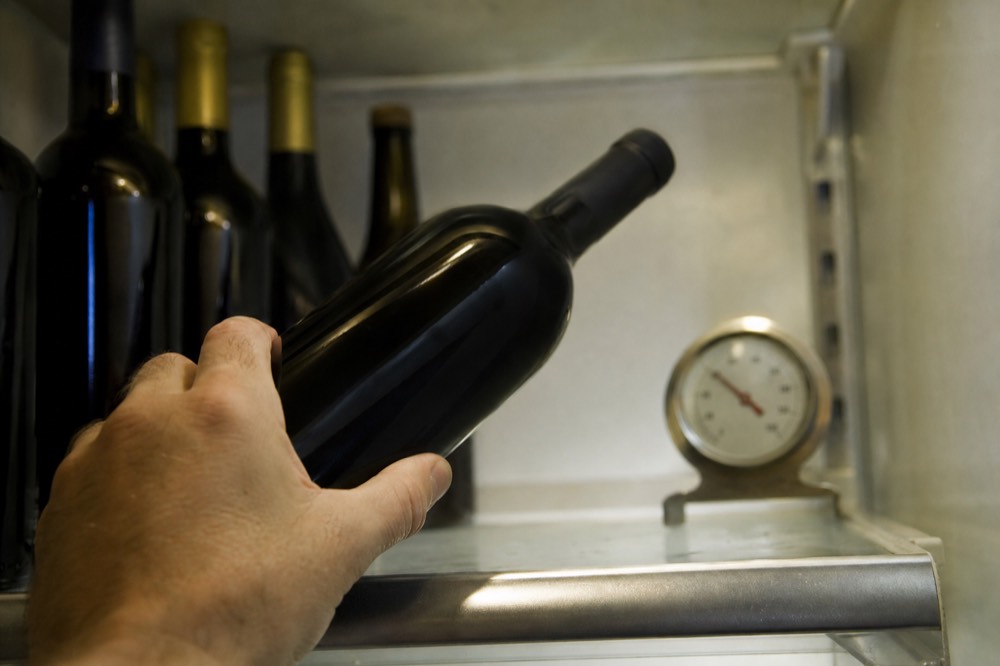
The practical version I would give anyone heading out to the tasting rooms: forget both numbers and learn what the right temperature feels like in the glass. A red that is too warm smells of alcohol before it smells of fruit and the finish goes soft and hot. A white that is too cold smells of almost nothing at all, which is the more common problem, and it resolves in the glass within a few minutes if you simply hold the bowl.
What temperature should wine actually be served at?
Full-bodied reds sit at roughly 61 to 64°F, light and medium reds around 55 to 61°F, and whites and sparkling wines between about 43 and 54°F. Those ranges are consistent across the standard references, including the serving cheat sheet published by Wine Enthusiast, and they are what every version of the timing rule is trying to reach.
Work backwards from the target and the rules explain themselves. A red sitting in a 75-degree room is above its range, so it goes into cold for a while. A white straight out of a fridge is below its range, so it comes out and waits. The clock is only a proxy for the thermometer.
| Wine type | Serving range | Getting there |
|---|---|---|
| Full-bodied reds | About 61 to 64°F | Roughly 30 to 60 minutes at room temperature from a cool cellar, or about 20 to 30 minutes in the fridge from a warm room |
| Light and medium reds | About 55 to 61°F | Zero to 30 minutes at room temperature, or a brief spell in the fridge |
| Whites and sparkling | About 43 to 54°F | Ice bucket for 15 to 30 minutes or more, then out of the fridge 15 to 30 minutes before pouring if it has been chilling all day |
You can read the Wine Enthusiast serving cheat sheet for the full breakdown. The single most useful line in any of these guides is the one about sparkling wine: it is the only category where being slightly too cold does no real harm, which is why an ice bucket is the default for it and a mistake for a Tempranillo.
Why do these rules fall apart in Texas heat?
Because the "room temperature" half of the guidance assumes a room. July and August daily highs in Fredericksburg sit in the low 90s, and most tasting happens outdoors on patios and lawns. A red poured at a perfect 62°F is out of range within minutes on a table in the sun, so the target moves down, not up.
This is the part the internet's version of the rule never covers, and it is the part that actually matters on a Hill Country Saturday. The physics are unforgiving: a glass with an inch of wine in it, on a hot limestone table, in direct sun, equilibrates fast. After a decade of tasting days out here I have watched more good reds ruined by an open patio in August than by any cellar mistake.
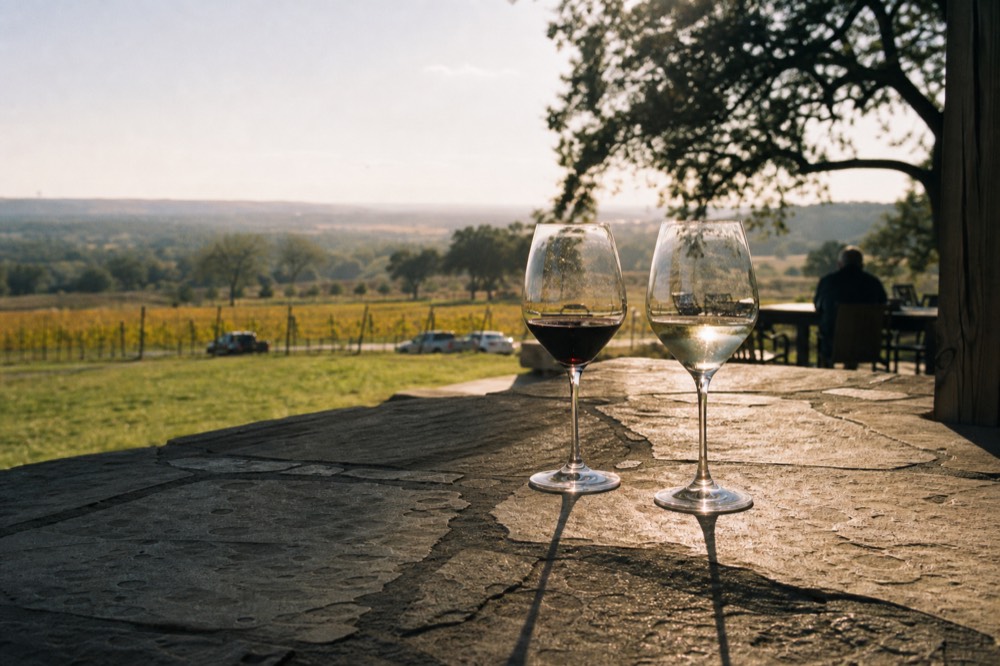
Three adjustments follow, and they are all things you can do without being an insufferable guest about it. Start the red a touch cooler than its range rather than dead centre, because it will only warm. Sit inside or in deep shade when the room offers a choice, particularly between noon and four. And treat the water glass as equipment rather than politeness: hydration between pours is the difference between a fourth stop that is pleasant and a fourth stop you will not remember.
How do tasting rooms handle serving temperature?
Better than most homes, because the wine lives in a cellar or a conditioned case rather than a kitchen. The variable is not the bottle, it is where you drink it. Rooms with indoor bars hold their pours in range. Lawn seating and patio tables in a Texas summer do not, whatever the room does at the tap.
With close to 100 wineries, vineyards and tasting rooms across the county by Visit Fredericksburg's count, there is no single house style to rely on, and the difference between rooms shows up in the glass faster in August than in any other month.
That is worth knowing before you plan a route, because it changes what a good stop looks like by season. From roughly November through April, the lawns and the long patio tables are the best thing about a Fredericksburg tasting day. From June through September, the rooms that seat you indoors with the vents running are quietly doing you a favour, and the ones with covered patios and fans are the compromise.
Pacing does the rest. Four rushed flights in an afternoon is where temperature problems compound, because you are always half a glass behind and the wine is always sitting. The tours capped at ten or fourteen guests move slower by design, which is one of several reasons they cost more. If an unhurried day is what you want from the wine rather than a longer stop list, the boutique format capped at ten people gives each pour time to open up, and you can see the itinerary and what the ticket covers before you book. The fee side of that decision is broken down in the tasting fee figures for Fredericksburg wineries. For the etiquette and pacing side, the tasting-room how-to guide covers what a flight includes and how to work through one without hurrying.
If you are choosing dates as well as rooms, temperature is one more argument for the shoulder seasons, and the best time to visit Texas wineries weighs that against crowds and harvest.
Does any of this matter on a wine tour?
Yes, in one specific way: a tour removes the two things that wreck serving temperature, which are rushing and driving. You are not watching a clock to get to the next stop, and you are not the person abstaining. What the tour cannot do is choose shade for you, so ask for an indoor seat in summer.
The seasonal read is simple. In the cooler half of the year, take the day that gives you the longest stops and the most outdoor time. In July and August, prioritise rooms with real indoor seating, and consider the formats that break up the wine with something else. A three-stop Sprinter that mixes wineries with breweries and distilleries changes the temperature problem entirely, since beer and spirits do not care about a patio the way a Tempranillo does. It is a new listing without traveller reviews yet, which is worth knowing before you book, and you can check the stops and the current price to see whether the mix suits your group.
The rest of the field sits on the wine experiences hub, and if the deciding factor turns out to be budget rather than temperature, what a wine tour actually costs lays out the whole ladder from the $99 seat to the $850 private day.
One last thing about the twenty minute rule. Its real value is not the number. It is the reminder that wine has a temperature at all, and that the bottle in front of you is probably on the wrong side of it. Notice that, adjust by feel, and you have got everything the rule was ever trying to give you.
Your next step
Choose a date for Boutique winery day
Starting recommendation · confirm the details for your party
Find the format for your day · compare options
The starting recommendation is general guidance. Compare a format, then check your starting point, time and party. All listed tours operate in English; confirm specific access needs with the operator.
Choose any details to narrow the options. Prices and availability are confirmed with the provider.
Other formats in this comparison
- Cowboy three-winery bus: Four hours, three wineries and four to five tastings at each stop. Fredericksburg Visitor Center rear lot. Tastings, light snacks and water included; meals extra. Adult wine experience; check the date and party on GetYourGuide.
Compare your full-day costs
Use current quotes for the same party. Include tasting fees, meals, transport and required extras in both totals. This compares your figures, not a supplier quote.
Check your date before arranging the rest of your day. Three boutique winery visits with tastings and lunch.
Visitor Center departure; optional paid pickup within 5 miles. At least 4 passengers needed to operate. Shared tour up to 10; online bookings up to 8. Winery selection varies. Free cancellation at least 24 hours before departure; check the booking terms.
Scheduled dates load automatically. Availability and final price are confirmed on Viator.