What town in Texas is known for wine? The case for Fredericksburg, by the numbers
Nearly 100 wineries in Gillespie County, about 50 on one 30-mile stretch of US 290, and the third-largest AVA in America. Plus the honest counterarguments.
 By Robert Schneider, Fredericksburg wine tour specialist & Hill Country experience guide
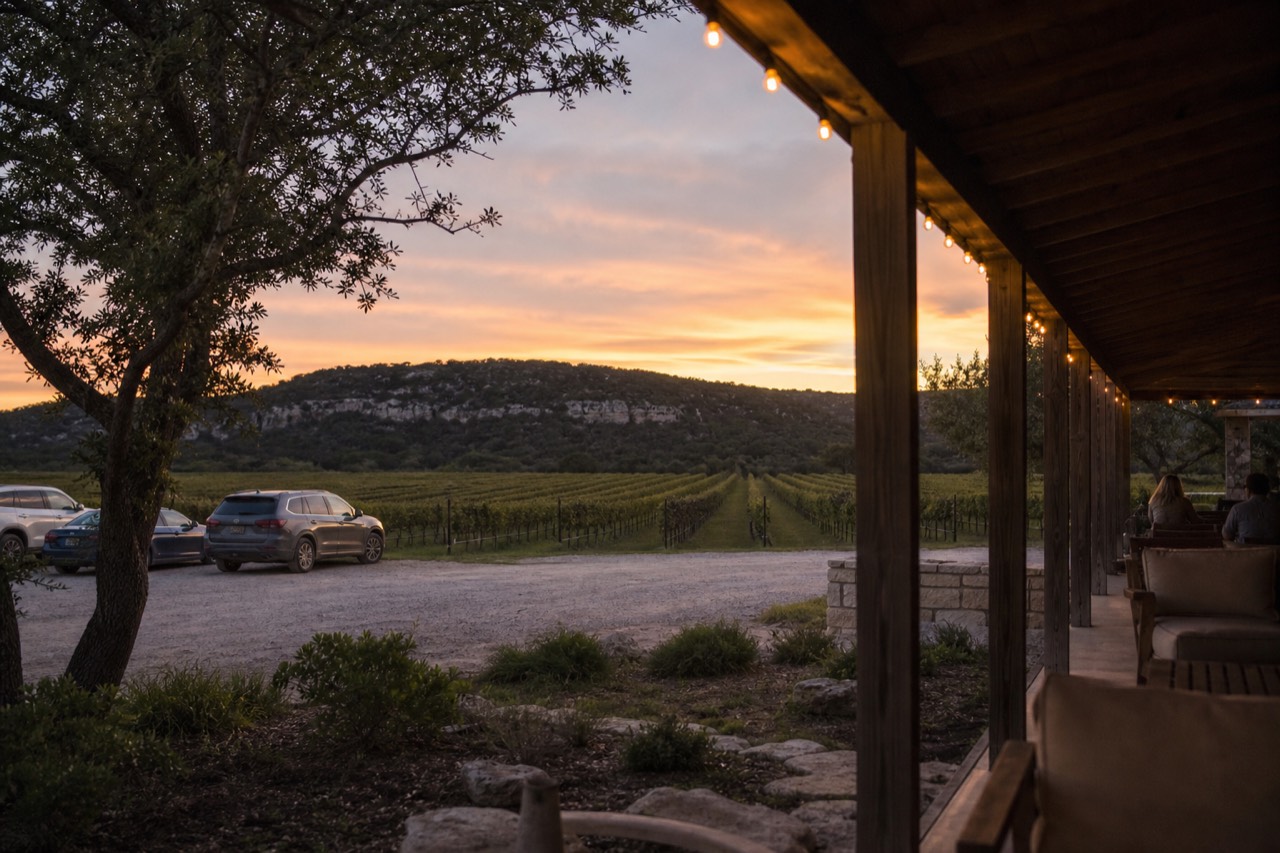
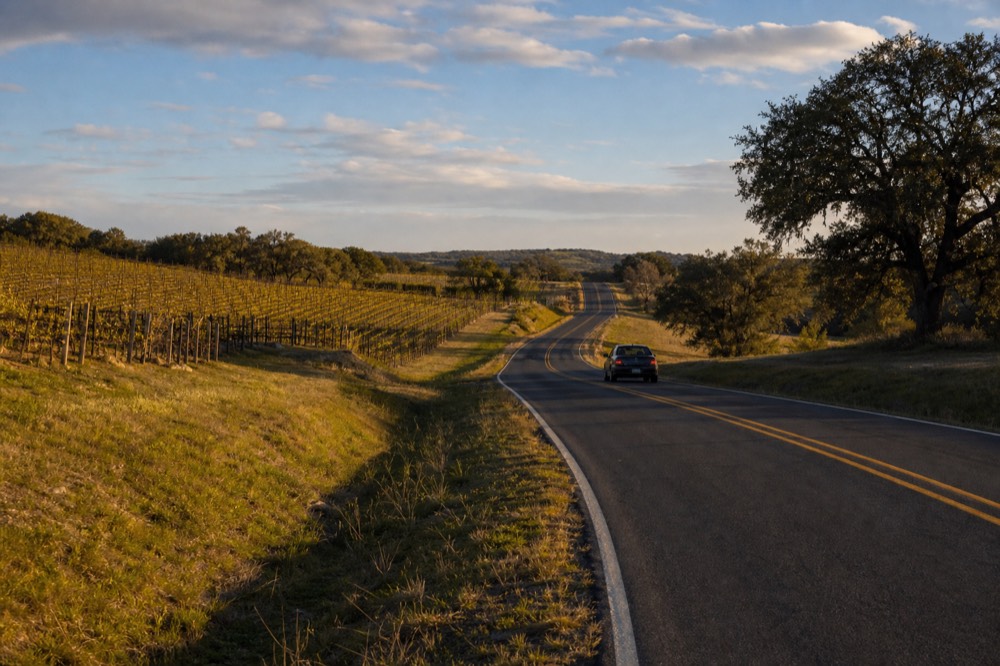
Drive west out of Johnson City on US 290 and start counting entrance signs. You will run out of attention before you run out of wineries. About 50 of them sit along that roughly 30-mile stretch of highway into Fredericksburg, which is a density you normally associate with Napa's Highway 29 or the Silverado Trail, not with a Texas county of fewer than twelve thousand residents in its county seat.
That concentration is the answer to the question, and it is also why the question keeps getting asked. Texas has wine coming out of Lubbock, out of the Davis Mountains, out of the Brazos Valley and out of a stretch of the southern Hill Country an hour from here. Only one town has arranged itself so that a visitor with a single afternoon can taste at three serious producers without ever getting on an interstate.
Price examples and review counts below were recorded in August 2026. Use a current quote, with all extras included, for your own comparison.
Three boutique winery visits with tastings and lunch. Explore Boutique winery day
What town in Texas is known for wine?
Fredericksburg, in Gillespie County. The official visitor bureau counts close to 100 wineries, vineyards and tasting rooms in the town and county, and roughly 50 of them line the 30-mile run of US 290 between Johnson City and Fredericksburg. No other Texas town concentrates that many producers within reach of a single day.
The phrase "wine capital of Texas" is marketing rather than a title anyone awards, so treat it as shorthand for a measurable thing: where the wine tourism actually happens. That near-hundred figure is the town's own count, published on the Visit Fredericksburg winery directory, and by that measure the contest is not close. Fredericksburg is a town of about 11,900 people according to the Census Bureau's July 2025 estimate, founded in 1846 by German settlers, and it now supports a tasting-room economy that would strain a city ten times its size.
The corridor is what makes it work. Wineries scattered across a large region are a driving project. Wineries strung along one highway are an afternoon. Everything about how visitors experience Texas wine, the shuttle industry, the tasting passports, the Saturday traffic, follows from the geography of that single road.
Worth being precise about the scope, though. The wider Texas Hill Country holds over 100 wineries in total, and the regional association, Texas Hill Country Wineries, lists over 60 members, having reached 69 by May 2025 with further additions since. Gillespie County is the dense center of that, not the whole of it.
| The number | What it counts |
|---|---|
| Close to 100 | Wineries, vineyards and tasting rooms in Fredericksburg and Gillespie County |
| About 50 | Wineries and vineyards along the 30-mile US 290 stretch from Johnson City |
| Over 100 | Wineries across the whole Texas Hill Country AVA |
| Over 60 | Members of Texas Hill Country Wineries, at 69 as of May 2025 |
| 9.6 million acres | Size of the Texas Hill Country AVA, about 15,000 square miles |
| Third largest | The AVA's rank among American Viticultural Areas |
| November 29, 1991 | Date the AVA was established, the 114th in the country |
| About 11,900 | Population of Fredericksburg, Census Bureau estimate for July 2025 |
How big is the Texas Hill Country AVA, and does size matter?
The Texas Hill Country AVA covers 9.6 million acres, about 15,000 square miles, making it the third-largest American Viticultural Area in the United States. It was established on November 29, 1991 as the nation's 114th AVA. The size is a fact about the boundary, not about planted vineyard acreage, and the difference between those two things matters.
An AVA is a legal boundary drawn around a growing area with shared geography, and the Hill Country's boundary is enormous because the limestone and granite terrain it describes is enormous. Nine point six million acres is bigger than several US states. Within it, the actual planted vineyard footprint is a very small fraction, scattered across producers who often source additional fruit from the High Plains up near Lubbock.
That last point is the one Texas wine writers argue about and visitors rarely hear. A significant share of the grapes that end up in Hill Country bottles are grown elsewhere in Texas, because the High Plains has the elevation and the diurnal swing that certain varieties want. This does not make the Hill Country a fake wine region. It makes it a region where the tasting rooms, the hospitality and a real share of the growing all concentrate in one beautiful place while some fruit travels.
For a visitor, the size number is mostly useful as context for why the driving is real. Two wineries that both say "Texas Hill Country" on the label can be two hours apart. The 290 corridor solves that by clustering, which is exactly why a private charter with a custom route or a fixed three-stop day beats trying to freelance across the whole AVA.
Has anyone outside Texas actually recognized the region?
Yes. USA Today's 10Best readers' choice awards named the Texas Hill Country the number three must-visit wine region. Texas wines took top accolades at the Decanter World Wine Awards in 2026. Wine Enthusiast has covered the region as well. These are external judgments, not local boosterism, and they are recent.
The Decanter result is the one that carries weight with people who care about what is in the glass rather than what is on the patio. Decanter's competition is one of the largest blind-judged wine awards in the world, and Texas showing up in its 2026 results is a different kind of signal from a tourism ranking. It says the wine is being taken seriously by judges with no stake in Texas.
The 10Best placement measures something else, and it measures it honestly: the region as a place to visit. Third among must-visit US wine regions puts the Hill Country in a conversation with Napa, Sonoma, Willamette and the Finger Lakes, which would have been an absurd sentence twenty years ago and is now just a result.
Here is the part I would push back on if you are setting expectations. Recognition for a region is not recognition for every room on the highway. Around 50 wineries along one stretch of road means a genuine spread in quality and seriousness, from properties farming their own blocks and making excellent Tempranillo to rooms that are principally an event venue with wine attached. Picking well matters more here than it does in a region with fifteen producers. That is the whole reason the wineries the tours actually pour at is worth reading before you build a route.
The 290TX private Sprinter runs four hours to Blumenthal Farms with either Arch Ray or Ogle and Barons Creek, for up to eleven people at $475 for the group, and you can check current dates and availability if that route suits your group. Split across a full vehicle that is about $43 a head.
Which Fredericksburg winery came first?
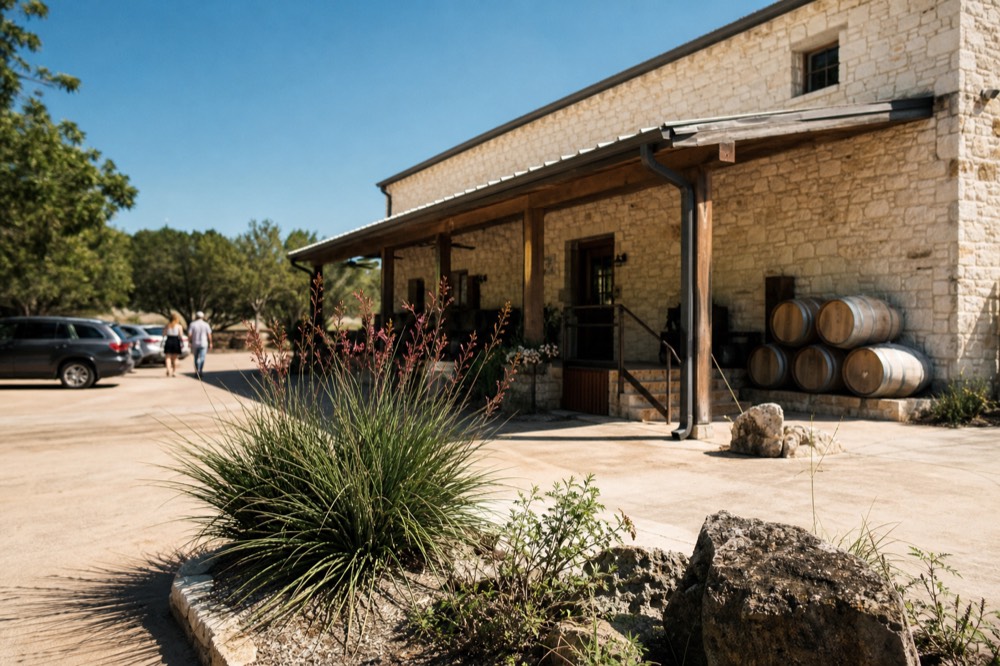
Bell Mountain Vineyards. Vines went in the ground in 1976 and the winery opened in 1983, making it the oldest in Fredericksburg and Gillespie County. Bell Mountain also became Texas's first American Viticultural Area in 1986, five years before the much larger Texas Hill Country AVA was established. Becker Vineyards followed in 1992.
The dates matter because they puncture a common assumption that Texas wine is a recent invention. Vines were planted here in the mid-seventies, when California's own modern era was barely a decade old and long before anyone in Texas was building a hospitality business around it. Fall Creek Vineyards dates to 1975 in the wider region. This is a fifty-year story, not a five-year one.
Bell Mountain earning its own AVA in 1986 is the detail I find most telling. Federal recognition of a distinct growing area, granted to a specific patch of Gillespie County, half a decade before the sprawling regional AVA existed. That is a small, specific, defensible claim, and it sits oddly next to the 9.6 million acre boundary drawn later.
The oldest properties are not automatically the ones to visit, and I would not build a day around dates alone. But if you like knowing what you are standing in, the historical thread from 1976 vines to a corridor of fifty tasting rooms is genuinely interesting, and the oldest winery in the Hill Country unpacks it further.
Where else in Texas has a real claim?
Lubbock, on production. Llano Estacado Winery there produces over 100,000 cases a year and is described as Texas's largest premium wine producer, now marking fifty years. And the southern Hill Country around Driftwood and Wimberley is the state's other tasting cluster, closer to Austin, with its own set of day tours that never come near Fredericksburg.
Lubbock and the Texas High Plains around it are where a great deal of the state's fruit is actually grown, at elevation, with cold nights that Hill Country limestone slopes cannot offer. If the question were "where does Texas wine come from," the honest answer would point north as much as it points here. Llano Estacado's scale alone dwarfs anything on the 290 corridor. What the High Plains does not have is a walkable town with a hundred tasting rooms around it, which is why visitors go to Fredericksburg and grapes go to Lubbock.
The Driftwood and Wimberley corridor is the more practically confusing one, because it gets marketed under the same "Texas Hill Country" banner and it sits an easy half-hour from Austin. It is a real cluster with real producers, and it is not Fredericksburg. Every half-day wine tour departing Austin on this site pours down there, at properties like Fall Creek's Driftwood tasting room, Duchman, Bell Springs and Wimberley Valley, sometimes with a stop at Salt Lick barbecue. Those tours do not reach Fredericksburg. If you are booking from Austin and Fredericksburg is what you want, read the Austin departures explained before you pick, because the distinction costs people their whole day.
San Antonio is the other useful comparison, and it works differently again. Fredericksburg is about 70 miles from San Antonio and about 78 from Austin, and the long day trips up from San Antonio genuinely arrive here, running roughly ninety minutes each way to properties like Sister Creek and Texas Wine Collective. The San Antonio day trips are the honest option for a visitor based down there.
| Texas wine region | Its strongest claim | Do tours from here reach Fredericksburg? |
|---|---|---|
| Fredericksburg and Gillespie County | Close to 100 wineries and tasting rooms, about 50 on one 30-mile highway stretch | This is Fredericksburg |
| Texas High Plains, around Lubbock | Llano Estacado produces over 100,000 cases a year as Texas's largest premium producer | No, and it is not a day-trip tasting destination |
| Driftwood and Wimberley, southern Hill Country | The other tasting cluster, closest to Austin | No. These tours stay in the southern corridor |
| San Antonio departures | Not a wine region, a departure point about 70 miles away | Yes, roughly 90 minutes each way |
How do you actually taste the wine capital in one day?
Pick three rooms, not five, and let someone else drive. Three stops is the format nearly every operator on the 290 corridor converged on, it runs about five hours, and it gets you twelve to fifteen pours with a lunch break in the middle. Trying to sample a hundred wineries in a weekend produces a blur, not a memory.
The mistake first-time visitors make is treating the count as a target. Close to a hundred rooms is a reason to choose carefully, not a to-do list. Two properties that farm their own fruit and pour with intent will teach you more about Texas wine than six patios in a row. Pick one big name for the setting, one small producer for the wine, and one you had never heard of because a driver who runs this corridor daily suggested it.
Money is the other reason to plan rather than wander. Tasting fees on the corridor run about $25 to $45 a flight, with Barons Creek at $30 and Grape Creek at $30 or $45 depending on which experience you pick. Three rooms is roughly $90 a head before lunch. Tours that bundle the fees start at $149 per person for a five-hour day with lunch, and the arithmetic gets closer than the ticket prices suggest. The full tasting-room how-to walks through fees, flights, etiquette and pacing, and one of Cottonwood's long days from San Antonio reaches Sister Creek, Kalasi Cellars and Texas Wine Collective in eight and a half hours if you want depth rather than speed, with current pricing and dates on the operator's listing.
One last piece of advice from a decade of running this corridor. Come on a weekday if you possibly can. The same fifty wineries that feel like a theme park on an October Saturday feel like a working wine region on a Tuesday in March, and the person pouring will have twenty minutes for you instead of ninety seconds. That single choice does more for your impression of Texas wine than any winery you could add to the list.
Your next step
Choose a date for Boutique winery day
Starting recommendation · confirm the details for your party
Find the format for your day · compare options
The starting recommendation is general guidance. Compare a format, then check your starting point, time and party. All listed tours operate in English; confirm specific access needs with the operator.
Choose any details to narrow the options. Prices and availability are confirmed with the provider.
Other formats in this comparison
- Three wineries & lunch: Three winery tastings, lunch and transport in one ticket. Marktplatz meeting point; pickup within 2 miles of downtown by arrangement. Vehicle may be an open cable car, limo bus or van. Up to 6 per online booking; larger parties must arrange with the operator. Free cancellation at least 24 hours before departure; check the booking terms.
- Austin Hill Country wine shuttle: Two Hill Country wineries and an Austin winery stop with shared transport. 4.5 hours from Austin Visitor Center. Tastings cost extra. This itinerary does not visit Fredericksburg. No pets; service-dog arrangements require operator approval. Free cancellation at least 24 hours before departure; check the booking terms.
- Cowboy three-winery bus: Four hours, three wineries and four to five tastings at each stop. Fredericksburg Visitor Center rear lot. Tastings, light snacks and water included; meals extra. Adult wine experience; check the date and party on GetYourGuide.
Compare your full-day costs
Use current quotes for the same party. Include tasting fees, meals, transport and required extras in both totals. This compares your figures, not a supplier quote.
Check your date before arranging the rest of your day. Three boutique winery visits with tastings and lunch.
Visitor Center departure; optional paid pickup within 5 miles. At least 4 passengers needed to operate. Shared tour up to 10; online bookings up to 8. Winery selection varies. Free cancellation at least 24 hours before departure; check the booking terms.
Scheduled dates load automatically. Availability and final price are confirmed on Viator.