Texas Hill Country wine tours, and the two corridors nobody explains
Two trips share the name Hill Country wine tour. One of them ends up in Fredericksburg and one of them never gets within sixty miles of it.
 By Robert Schneider, Fredericksburg wine tour specialist & Hill Country experience guide
Short answer
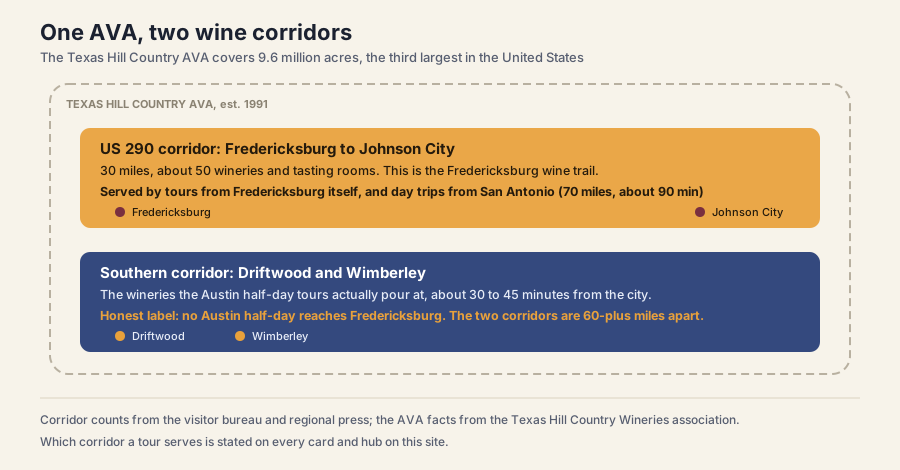
The Texas Hill Country AVA covers 9.6 million acres, the third largest appellation in the country, and holds two distinct wine trails. The US 290 corridor runs to Fredericksburg. The Driftwood and Wimberley corridor sits south of Austin. Tours from San Antonio reach Fredericksburg; the Austin half-days do not.
Two winery tastings and free time in Fredericksburg, with the round-trip driving handled. Check dates: San Antonio wine & town day
Book a "Texas Hill Country wine tour" out of Austin and there is a good chance you will spend the day in Driftwood, roughly sixty miles from the town most people picture when they hear the phrase. Nobody is lying to you. The appellation really does stretch that far. It covers 9.6 million acres, which makes it the third largest in the United States, and a trail at one end of it can have nothing to do with a trail at the other. The confusion costs visitors real money every season, and it is the first thing this guide fixes.
Price examples and review counts below were recorded in August 2026. Use a current quote, with all extras included, for your own comparison.
Two winery tastings and free time in Fredericksburg, with the round-trip driving handled. Explore San Antonio wine & town day
What is the Texas Hill Country AVA, and how big is it really?
The Texas Hill Country AVA was established on November 29, 1991, as the nation's 114th American Viticultural Area. It covers 9.6 million acres, about 15,000 square miles, making it the third largest AVA in the country. More than 100 wineries operate inside it, and over 60 belong to the regional association.
Size is the fact that explains everything else about touring here. Napa Valley is a place you can drive across before lunch. The Texas Hill Country is an area the size of a small country, wrapped around the Balcones Escarpment and taking in dozens of towns, and no single tour covers a meaningful fraction of it. When an operator says Hill Country, they mean a cluster of properties within an hour or so of their own depot.
The association figure is worth being precise about. Texas Hill Country Wineries lists over 60 member wineries, and a mid-2025 report put the count at 69 after a round of new admissions, with further growth since. Membership is not the same as existence: the AVA holds more than 100 wineries in total, while the official visitor bureau's winery directory puts Gillespie County alone at close to 100 wineries, vineyards and tasting rooms. The two numbers overlap heavily and neither is a typo. The regional association publishes its own member list if you want the current roster.
None of this makes the region's biggest producer local. Llano Estacado, up in Lubbock on the High Plains, turns out more than 100,000 cases a year and is described as Texas's largest premium wine producer. Much of the fruit grown for Hill Country labels comes from the High Plains too. The tasting rooms are here; a good share of the vineyards that feed them are not.
| Texas Hill Country AVA | Figure |
|---|---|
| Established | November 29, 1991 |
| National sequence | 114th AVA approved in the United States |
| Size | 9.6 million acres, about 15,000 square miles |
| National rank by size | Third largest AVA in the country |
| Wineries inside the AVA | More than 100 |
| Regional association members | Over 60, reported at 69 in May 2025 |
| Gillespie County alone | Close to 100 wineries, vineyards and tasting rooms |
| Wineries on the 290 corridor | About 50 across a 30-mile stretch |
Why does "Hill Country wine tour" describe two different trips?
Because two separate tasting corridors sit inside the same appellation, ninety minutes apart. The northern corridor follows US 290 through Johnson City to Fredericksburg. The southern corridor clusters around Driftwood and Wimberley, just outside Austin. Operators in each city work their own corridor, and both use the regional name.
Here is how it works in practice. A Fredericksburg-based operator picks you up downtown and works the wineries strung along 290 and the roads off it. An Austin-based operator drives you thirty minutes southwest to Driftwood, pours at properties there and around Wimberley, and has you back in the city by late afternoon. Both trips are legitimately in the Hill Country. They share almost no wineries.
The southern corridor is closer to Austin, which is why the half-day format exists there and not here. Fredericksburg is about 70 miles from Austin and about the same from San Antonio, roughly ninety minutes of driving each way. You cannot build a four and a half hour tour out of Austin that reaches Fredericksburg, tastes at three wineries and returns. The maths does not work, so nobody sells it, and the tours that do run out of Austin at that length go south instead.
That is the entire explanation, and it is why the pricing looks strange until you know it. The cheapest ticket in this whole category is $69 for a barbecue and wine day out of Austin. It is a good day. It is not a Fredericksburg day.
| Northern corridor | Southern corridor | |
|---|---|---|
| Anchor town | Fredericksburg | Driftwood and Wimberley |
| Main road | US 290 through Johnson City | Ranch roads southwest of Austin |
| Winery density | About 50 across 30 miles | Smaller cluster, fewer properties |
| Usual departure cities | Fredericksburg itself, San Antonio | Austin |
| Typical tour length | 5 to 8.5 hours | 4.5 to 5.5 hours |
| Tastings usually | Included in the ticket | Paid at each stop, about $20 to $25 |
| Reaches Fredericksburg | Yes | No |
Which Hill Country wine tours actually reach Fredericksburg?
Tours departing Fredericksburg itself and the day trips up from San Antonio reach Fredericksburg wineries. The half-day and full-day tours departing Austin do not: they pour in Driftwood and Wimberley in the southern corridor. That is not a criticism of them, it is a routing fact worth knowing before you book.
Fifteen of the nineteen tours listed on this site reach Fredericksburg. The other four leave from Austin and stay south. Those four are genuinely well reviewed, one of them carrying 353 traveller reviews at 4.9, and they are the right choice for a visitor based in Austin with a single free afternoon. They are the wrong choice for anyone whose plan says the words Main Street or 290.
The distinction gets buried because the marketing language is identical on both. Both say Hill Country. Both show limestone and vine rows. If you are booking from out of state, the only reliable check is the stop list: if it names Driftwood, Wimberley, Fall Creek's Driftwood tasting room, Duchman, Bell Springs or the Salt Lick, you are in the southern corridor. If it names Grape Creek, Barons Creek, Becker, Sister Creek, Texas Wine Collective, Wedding Oak or Kalasi, you are heading to Fredericksburg.
The full southern list, with what each visits and what it costs, lives on the Austin departure hub, which says the same thing this section does in the same plain terms. If you want the Fredericksburg-reaching version from that direction, the practical answer is to drive out and join a tour here, or to come at it from the other city.
If you are already in San Antonio, the day trips are the cleanest solution in the whole category, and you can check dates and the current price on the six to seven hour version before you commit a Saturday to it.
| Departing from | Example tour | Where it pours | Reaches Fredericksburg |
|---|---|---|---|
| Fredericksburg | All-inclusive social day, 3 wineries, lunch, $149 pp | Wedding Oak, Charleston Taylor, Texas Wine Collective | Yes |
| Fredericksburg | Private Sprinter, 4h, $475 per group | Blumenthal Farms, Arch Ray or Ogle, Barons Creek | Yes |
| San Antonio | 6 to 7 hour day trip, $179 pp | Sister Creek, Texas Wine Collective, plus Main Street time | Yes |
| San Antonio | 8.5 hour long day, $229 pp | Sister Creek, Kalasi Cellars, Texas Wine Collective, town | Yes |
| Austin | 4.5 hour shuttle, $74.69 pp | Driftwood and Wimberley | No |
| Austin | 4.5 hour barbecue and wine day, $69 pp | Salt Lick plus three southern wineries | No |
| Austin | 5 hour shared limousine, $185 pp | Fall Creek Driftwood, Wimberley Valley, Salt Lick | No |
| Austin | 5 hour luxury limousine, $300 pp | Duchman, Bell Springs, Wimberley Valley | No |
What is the 290 corridor between Johnson City and Fredericksburg like?
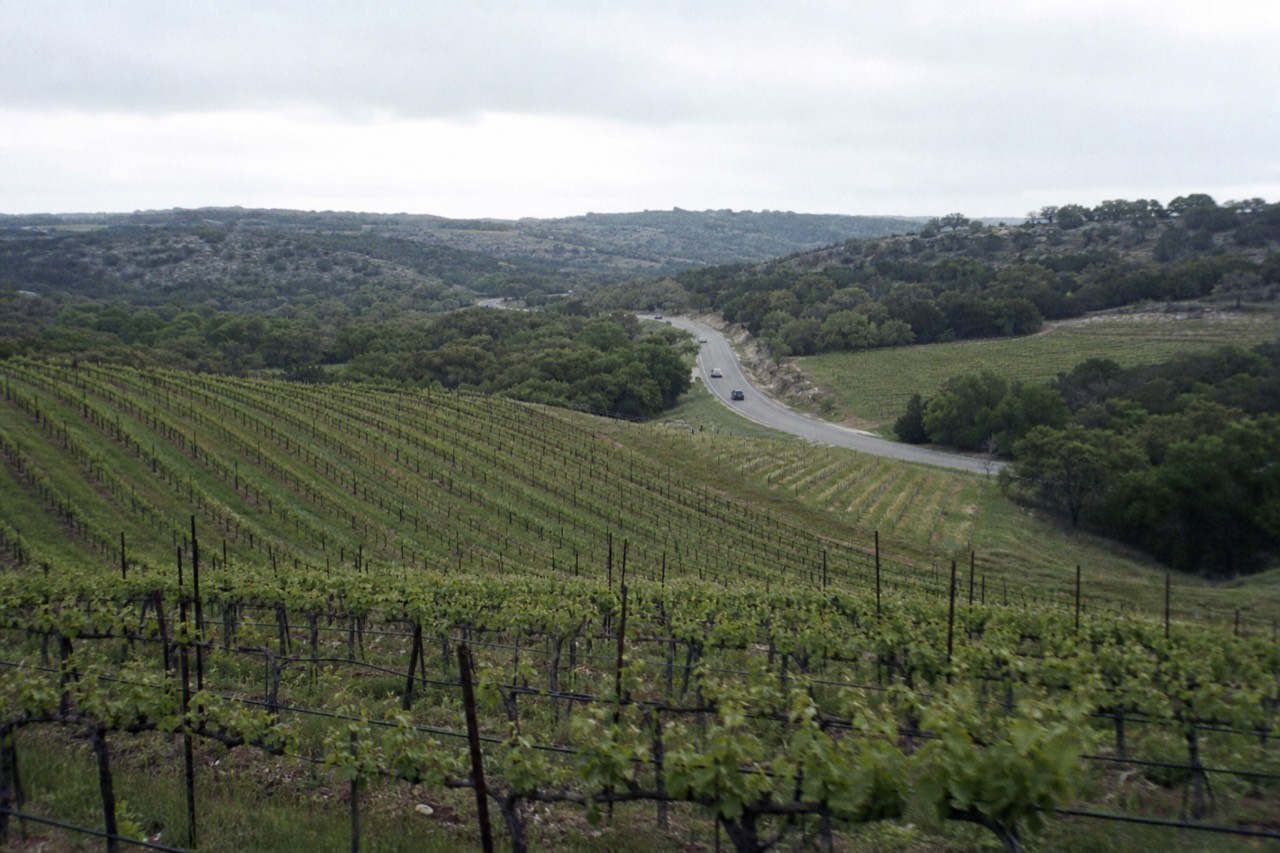
About 50 wineries and vineyards sit along the 30-mile stretch of US 290 between Johnson City and Fredericksburg, which is the highest concentration of tasting rooms in Texas. It is a straight highway with tasting rooms set back on both sides, and on a Saturday it behaves like a single very long, very busy street.
Driving it is easy and parking on it is not. The rooms closest to town fill first, the mid-corridor properties fill by early afternoon, and the ones out toward Johnson City stay workable longest. Groups that arrive on a Saturday with no plan tend to spend the day at whichever three places had spaces, which is a poor way to choose wine.
Tour operators solve this with arrival windows. A booked group has a slot at each stop, which is why a guided day tastes at the rooms it intended to and a self-drive day often does not. That advantage is largest in October, when the whole corridor is running the month-long passport event.
The corridor's history is shorter than the crowds suggest. Bell Mountain Vineyards planted vines in 1976 and opened in 1983, and it is generally cited as the oldest winery in Fredericksburg and Gillespie County. Bell Mountain became Texas's first AVA in 1986, five years before the Hill Country appellation existed at all. Becker Vineyards arrived in 1992. The oldest winery question has its own page, because the answer changes depending on whether you mean the county, the region or the state.
For the room-by-room version of this corridor, including what the tours actually pour at, the detailed 290 wine road guide walks it end to end, and the pick of the best wineries near town narrows it to a shortlist.
What do the Austin tours actually visit, and who should book them?
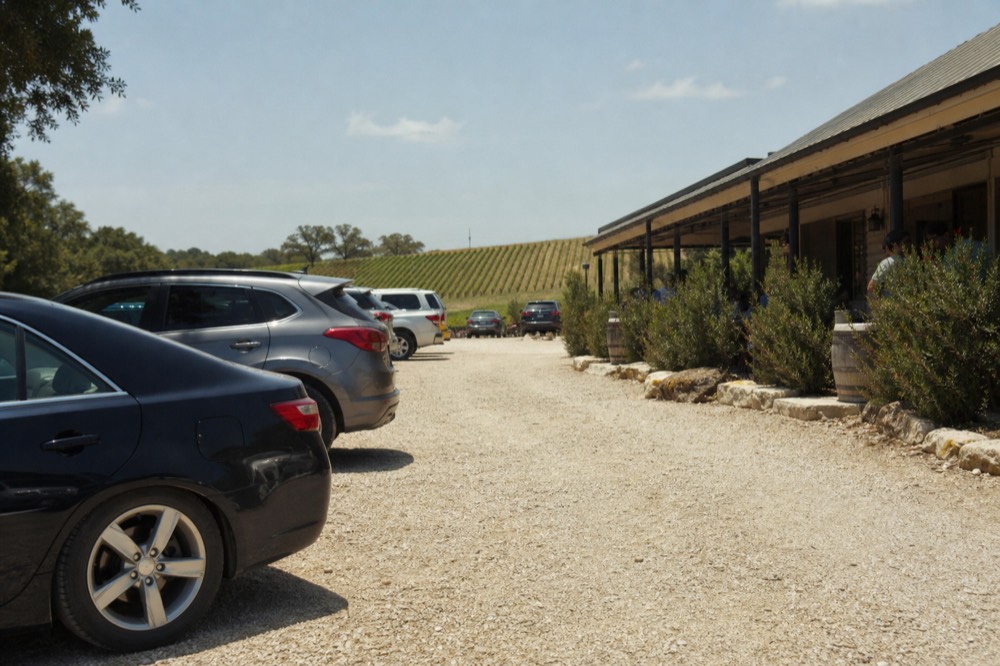
They visit the southern corridor: Driftwood, Wimberley and the properties around them, generally with the Salt Lick barbecue stop attached. They suit anyone based in Austin with half a day free. They are not a way to see Fredericksburg, and every listing's stop list confirms it.
Take the most popular of them, a 4.5 hour shuttle with 353 reviews at 4.9 and a $74.69 starting price. Tastings are paid at each stop, running roughly $20 to $25 a flight, so the real spend lands closer to $135 for three rooms. That is still a reasonable Saturday for someone who wants wine, a driver and to be home by six. It is simply a different trip from the one this site mostly covers, and you can read the southern-corridor stop list on the listing itself to see the difference in black and white.
The barbecue version at $69 is the cheapest ticket in the entire category and follows the same logic: 5.5 hours, three southern-corridor wineries, food and tastings on your own bill. The two limousine options run $185 and $300, with the more expensive one including tastings outright, which flips the value calculation in its favour once you have done the arithmetic.
There is one honest way to combine Austin and Fredericksburg, and it involves a car. Drive the 70 miles out, stay the night, and join a Fredericksburg-based tour the following day. The weekend itinerary walkthrough sets out exactly how that weekend is shaped, including where the tour slots in.
| Austin-departing tour | Length | Stops | Tastings | From | Cancellation |
|---|---|---|---|---|---|
| Half-day wine shuttle | 4.5h | Driftwood and Wimberley | Paid at stops, about $20 to $25 each | $74.69 pp | Free to 24h |
| Barbecue and wine day | 4.5h | Salt Lick plus 3 wineries | Own bill | $69 pp | Free to 24h |
| Shared stretch limousine | 5h | Fall Creek Driftwood, Wimberley Valley, Salt Lick | Own bill | $185 pp | Non-refundable |
| Luxury limousine half-day | 5h | Duchman, Bell Springs, Wimberley Valley | Included | $300 pp | Free to 24h |
How do San Antonio day trips reach Fredericksburg?
They drive it. Fredericksburg sits about 70 miles northwest of San Antonio, roughly ninety minutes each way, and the operators build six to eight and a half hour days around that. All three include tastings, all three include time on Main Street, and all three cancel free up to 24 hours out.
This is the strongest answer for a visitor who is based in San Antonio and does not want to move hotels. The core day trip runs six to seven hours from La Villita, pouring at Sister Creek and Texas Wine Collective with free time downtown, at $179 per person with tastings included. It carries 296 reviews at 4.9, the second highest review count of any Fredericksburg-reaching tour on this site.
The Riverwalk hotel pickup version is the same idea with the pickup moved to your door, 6.5 hours at the same $179. The long day stretches to 8.5 hours and adds Kalasi Cellars as a third winery for $229, which is the version to take if you would rather taste at three properties than shop.
What you are buying with any of them is the removal of a three-hour round trip from your own hands. Ninety minutes each way on 290 after a tasting session is exactly the situation the open-container and DWI statutes exist for: Texas Penal Code 49.04 and 49.01 put the driver's limit at 0.08, while 49.031(c)(1) excepts passengers of a vehicle used to transport people for compensation from the open-container rule. The passenger seat is the legal place to be.
If your group wants the maximum number of tasting rooms out of a single day from the city, you can compare the 8.5 hour three-winery version against the shorter days. The rest of the options sit on the San Antonio day trip hub.
| San Antonio day trip | Length | Pickup | Wineries | Tastings | From |
|---|---|---|---|---|---|
| Taste of Fredericksburg | 6 to 7h | La Villita | Sister Creek, Texas Wine Collective | Included | $179 pp |
| Riverwalk pickup day trip | 6.5h | Riverwalk hotels | Sister Creek, Texas Wine Collective | Included | $179 pp |
| Aficionado long day | 8.5h | San Antonio | Sister Creek, Kalasi Cellars, Texas Wine Collective | Included | $229 pp |
What is Texas Hill Country wine actually known for?
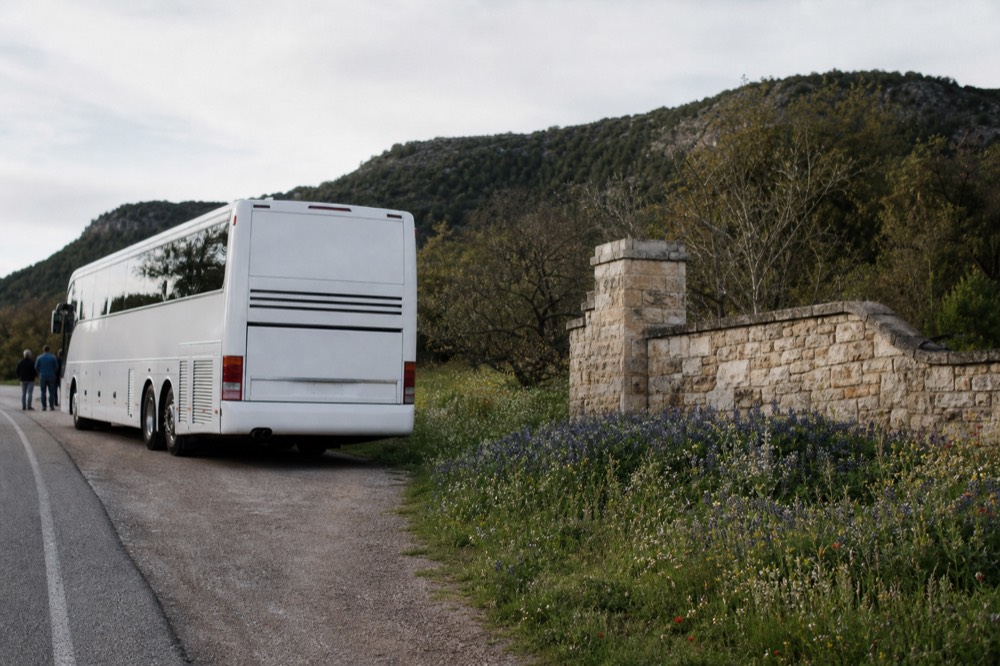
Tempranillo comes up more than any other grape in Hill Country conversation, and the region is winning outside recognition: USA Today's 10Best ranked it the number three must-visit wine region, and Texas wines took top accolades at the 2026 Decanter World Wine Awards. A definitive signature-varietal list is not something official sources support, so this page will not pretend otherwise.
I want to be careful here, because varietal claims are where wine writing gets sloppy. You will find pages that confidently list four or five grapes as the region's signature. When I went looking for a primary source behind those lists, I did not find one. What is supportable is that Tempranillo is mentioned constantly in Hill Country contexts, that Mediterranean and Iberian varieties suit the heat better than the classic cool-climate grapes, and that the wineries themselves are the ones to ask on the day.
The recognition, by contrast, is documented. The number three placing on USA Today's 10Best must-visit wine regions list is real, as are the 2026 Decanter World Wine Awards results and the Wine Enthusiast coverage the regional association highlights. For a wine industry that most Americans could not place on a map fifteen years ago, that is a meaningful shift.
The practical reading for a visitor is this: come with an open palate rather than a shopping list. The rooms here pour things you will not find at home, the house style runs warmer and riper than a California comparison would suggest, and the flights are structured to show you range rather than to sell you one bottle. Whether Fredericksburg has earned the title of the state's wine capital is argued out on the wine capital question.
One number people always want and I will not print: an exact statewide count of Texas wineries with 2026 economic-impact figures. That data did not turn up in official sources when this page was researched, and a made-up figure is worse than an absent one.
How many wineries can you realistically visit in one day?
Three, and that is not a limitation imposed by the tours, it is the honest ceiling of a tasting day. Every serious operator on this trail builds around three stops, with the shorter experience tours running two. Four is possible and almost nobody enjoys the fourth.
The maths of a tasting stop is more rigid than people assume. A flight is four or five pours. Add the walk in, the wait at a busy bar, the conversation with whoever is pouring, the time spent looking at the view because the view is half the reason you came, and a room takes about an hour. Three rooms is three hours. Add lunch and the driving between them and you have filled five and a half hours, which is exactly why so many tours on this list run five to five and a half.
The palate is the other constraint and the one nobody wants to hear about. After twelve or fifteen pours, most people stop registering differences between wines, which means the fourth winery is money spent on an experience you will not remember clearly. This is true for experienced tasters as well as beginners. The professionals spit; visitors on holiday generally do not.
Where extra hours genuinely help is at the long end. The 8.5 hour day trip from San Antonio does three wineries plus town time, and that town time is doing real work: it breaks the day, gets food and water in, and resets the palate before the last stop. Compare that to a five hour day squeezing the same three rooms in, and the longer version is the more comfortable trip even though the stop count is identical.
The one format that breaks the pattern is the bus tour from the visitor centre, which runs three wineries with four to five pours at each. That is a lot of wine for a half day, and the operator's own listing notes snacks and water rather than lunch, so eat properly before you board.
After a decade of running tasting days out here, my own rule is simple: three rooms, one of them chosen for the setting rather than the wine, and lunch in the middle rather than at the end. Groups that follow that shape talk about the wine on the drive home. Groups that chase a fourth stop talk about how tired they are.
| Format | Hours | Winery stops | Pours per stop | Hours per stop including travel |
|---|---|---|---|---|
| Short experience tour | 90 min total | 2 | 4 total | Under an hour each |
| Private Sprinter half day | 4h | 2 | Flight per room | About 2 hours each |
| All-inclusive social day | 5h | 3 | Flight per room | About 1 hour 40 each |
| Limousine day | 5h | 3 | Paid per room | About 1 hour 40 each |
| Customizable or boutique day | 5.5h | 3 | Flight per room | About 1 hour 50 each |
| Bus tour from the visitor centre | Half day | 3 | 4 to 5 each | Tight, no lunch stop |
| San Antonio day trip | 6 to 7h | 2 | Flight per room | Plus 3 hours of driving |
| Aficionado long day | 8.5h | 3 | Flight per room | Plus town time and driving |
What do tastings cost across the region, and which tours cover them?
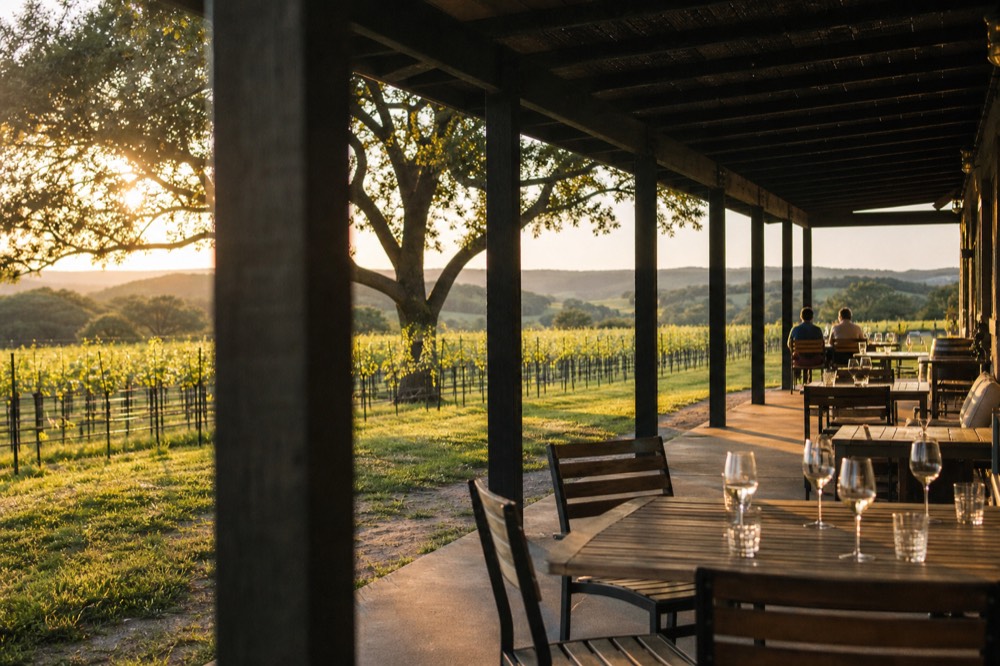
Published fees at Fredericksburg-area rooms run from about $25 to $45. Barons Creek charges $30 a person. Grape Creek charges $30 for the classic tasting and $45 for the taste-and-tour. Southern-corridor stops on the Austin shuttles run about $20 to $25. All-inclusive tours fold these into the ticket; private and limousine tours generally do not.
This single line item decides which tour is actually cheapest, and it is the one most people skip past. Three tastings at $30 is $90 per person on top of whatever the seat cost. On a $99 limousine day, tastings can double the real price. On a $149 all-inclusive day, they are already paid.
Run the arithmetic for a couple. Two seats at $99 is $198, plus six tastings at $30 is $180, landing at $378 with no lunch. Two seats at $149 is $298 including lunch and every flight. The cheaper ticket is the more expensive day. That is not always true, because some groups drink less and some rooms charge less, but it is true often enough that the sticker price is close to meaningless on its own. The full ladder is broken down in the wine tour cost guide.
Private tours need the same treatment with different numbers. A $475 private Sprinter across eleven people is $43 a head, then tastings on top. A $850 private custom day across the same group is $77 a head, tastings on top again. Both beat per-person pricing at full occupancy and both lose badly at four people.
| Where | Published fee | Included on all-inclusive tours | Included on limousine and private tours |
|---|---|---|---|
| Barons Creek Vineyards | $30 per person | Yes | No, paid at the bar |
| Grape Creek classic tasting | $30 per person | Yes | No |
| Grape Creek taste and tour | $45 per person | Varies by tour | No |
| Typical Fredericksburg-area room | $25 to $45 | Yes | No |
| Southern corridor stops from Austin | About $20 to $25 | Only on the $300 luxury limousine | No |
When is the best time to tour the Texas Hill Country?
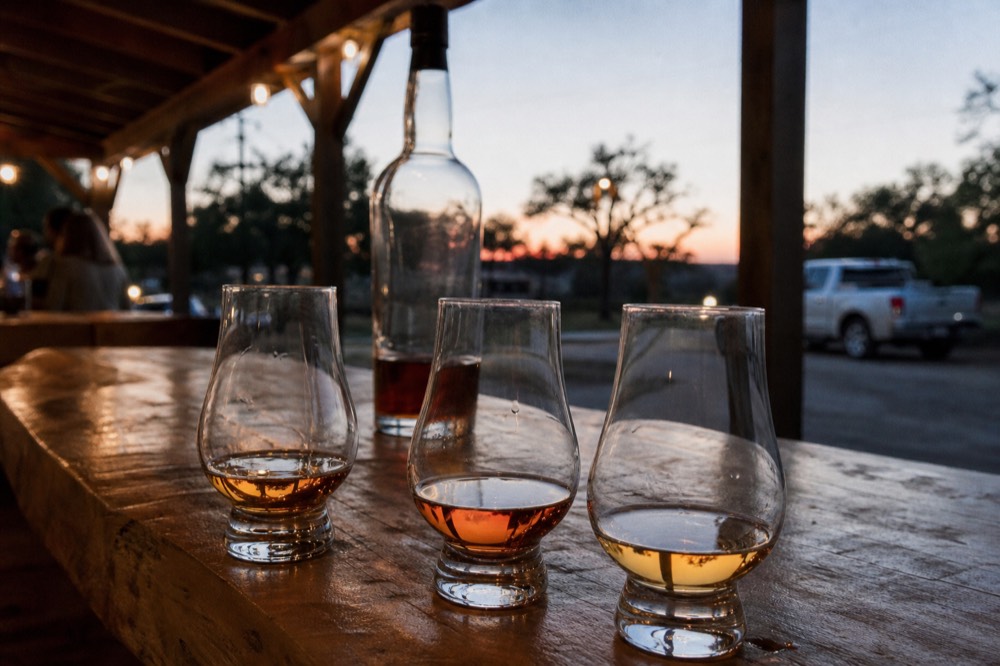
October, if you can take the crowds. The Texas Wine Month passport runs October 1 to 31 across more than 50 wineries, the Fredericksburg Food and Wine Fest lands October 22 to 25, and the weather finally cooperates. April is the quieter alternative, with wildflowers and comfortable temperatures.
The regional calendar has more structure than a first-time visitor expects. Summer carries its own season pass from June 1 to August 31, which is aimed squarely at the months when a mid-afternoon patio is uninhabitable. Grape stomps appear at properties across July and August, tied to the actual harvest, which in this heat starts far earlier than northern-hemisphere habit suggests.
Weather is the constraint. July and August highs sit typically in the low 90s, and the 1991 to 2020 normals give an annual high of 77 degrees, an annual low of 53, and 31.53 inches of rain, with winter carrying around 28 percent of it. January averages a low near 37 degrees. None of that stops a tasting day. It does decide whether you want the patio or the room.
Spring is the aesthetic pick. Bluebonnets typically peak from late March into mid-April, and the Willow City Loop northeast of Fredericksburg is the famous drive for them. It runs through private ranch land on a public road, so the standing local instruction is to stay on the road and out of the meadows.
The full event calendar with dates, including what has and has not been published for the Christmas season, is in the 2026 wine festival and event rundown.
| Season | Weather | What is on | Tour availability |
|---|---|---|---|
| Winter, January to February | Coldest, average low near 37F | Quiet rooms, easy bookings | Widest, cheapest weekends |
| Spring, March to May | Best all-round conditions | Bluebonnets late March to mid-April, peaches from mid-May | Tightening on weekends |
| Summer, June to August | Highs typically low 90s | Summer season pass June 1 to August 31, grape stomps July to August | Good, book morning departures |
| Autumn, September to November | Cooling, clearest skies | Texas Wine Month all October, Food and Wine Fest October 22 to 25 | Tightest of the year |
How should you choose between the region's tours?
Decide three things in order: which corridor you need, whether you want tastings inside the ticket, and whether your group is big enough for per-group pricing to win. Those three answers narrow nineteen tours to two or three, and price sorts the rest.
Corridor first, because it is the only one you cannot fix later. If Fredericksburg is the point, you are booking from Fredericksburg or San Antonio. If you are in Austin with an afternoon, you are booking south and enjoying it for what it is.
Inclusion second. All-inclusive days remove every decision and every extra payment, and they are where first-time visitors have the best experience. The $149 five-hour day with downtown pickup covers three wineries, lunch and every tasting, and it carries 313 reviews at 4.8, the deepest review record on the Fredericksburg side. The full all-inclusive line-up compares them against each other.
Group size third. At eight or more people, the private Sprinter at $475 and the private custom day at $850 both start to beat per-person seats, with the caveat that tastings ride on top of both. Below six, per-person pricing wins almost every time.
One last filter, and it is the one people forget until it hurts: cancellation. Six of the nineteen tours are non-refundable, including the safari and all three stretched-limousine days. If your travel dates carry any risk, that is worth more than a $30 price difference.
A word on review counts, since they are the other thing people sort by. The depth varies enormously across this list, from 353 reviews on the most-booked Austin shuttle down to a handful on the newest listings. A high count is evidence that an operator has run the same day hundreds of times without the rating collapsing, which is genuinely useful. A low count is not evidence of a bad tour, particularly on the private and boutique end where a full year of departures might only be a few dozen groups. Read the number alongside the format rather than on its own.
Vehicle type deserves one line too, because it changes the day more than the itinerary does. An open-air vintage vehicle is a different experience from a Sprinter with air conditioning, and in July that difference is not cosmetic. In December it goes the other way. The stretched limousines sit somewhere in between and tend to suit celebration groups more than serious tasters, which is exactly what they are sold as.
Put those filters together and most people land in one of three places: an all-inclusive day out of Fredericksburg, a day trip up from San Antonio, or a private vehicle if the group is large enough to divide the cost properly. The nineteen listings narrow fast once you stop comparing headline prices and start comparing what is inside them.
Frequently asked questions
Do Austin wine tours go to Fredericksburg?
No. The half-day and full-day tours departing Austin pour in the southern Hill Country around Driftwood and Wimberley, roughly sixty miles from Fredericksburg. To reach Fredericksburg wineries you need a tour departing Fredericksburg itself or one of the day trips up from San Antonio.
How big is the Texas Hill Country AVA?
9.6 million acres, about 15,000 square miles, which makes it the third largest American Viticultural Area in the country. It was approved on November 29, 1991, as the 114th AVA, and it contains more than 100 wineries spread across many towns.
How many wineries are on the 290 corridor?
Around 50 wineries and vineyards sit along the roughly 30-mile stretch of US 290 between Johnson City and Fredericksburg. Gillespie County as a whole holds close to 100 wineries, vineyards and tasting rooms according to the official visitor bureau count.
Is Texas Hill Country wine any good?
The outside verdict has shifted. USA Today's 10Best ranked the region the number three must-visit wine region, and Texas wines took top accolades at the 2026 Decanter World Wine Awards. The house style runs warmer and riper than a cool-climate comparison would prepare you for.
What grape is the Hill Country known for?
Tempranillo comes up more often than any other in Hill Country conversation, and Mediterranean and Iberian varieties generally suit the climate. A definitive signature-varietal list is not backed by the official sources, so treat any confident four-grape list you read elsewhere with some caution.
Which departure city gives the best value?
San Antonio, if you want Fredericksburg wineries without moving hotels: $179 for a six to seven hour day with tastings included is strong. Fredericksburg itself is better if you are staying overnight, because the tours are shorter and the driving is already done.
Your next step
Choose a date for San Antonio wine & town day
Starting recommendation · confirm the details for your party
Find the format for your day · compare options
The starting recommendation is general guidance. Compare a format, then check your starting point, time and party. All listed tours operate in English; confirm specific access needs with the operator.
Choose any details to narrow the options. Prices and availability are confirmed with the provider.
Other formats in this comparison
- Three wineries & lunch: Three winery tastings, lunch and transport in one ticket. Marktplatz meeting point; pickup within 2 miles of downtown by arrangement. Vehicle may be an open cable car, limo bus or van. Up to 6 per online booking; larger parties must arrange with the operator. Free cancellation at least 24 hours before departure; check the booking terms.
- Austin Hill Country wine shuttle: Two Hill Country wineries and an Austin winery stop with shared transport. 4.5 hours from Austin Visitor Center. Tastings cost extra. This itinerary does not visit Fredericksburg. No pets; service-dog arrangements require operator approval. Free cancellation at least 24 hours before departure; check the booking terms.
- Cowboy three-winery bus: Four hours, three wineries and four to five tastings at each stop. Fredericksburg Visitor Center rear lot. Tastings, light snacks and water included; meals extra. Adult wine experience; check the date and party on GetYourGuide.
- Boutique winery day: Three boutique winery visits with tastings and lunch. Visitor Center departure; optional paid pickup within 5 miles. At least 4 passengers needed to operate. Shared tour up to 10; online bookings up to 8. Winery selection varies. Free cancellation at least 24 hours before departure; check the booking terms.
Compare your full-day costs
Use current quotes for the same party. Include tasting fees, meals, transport and required extras in both totals. This compares your figures, not a supplier quote.
Check your date before arranging the rest of your day. Two winery tastings and free time in Fredericksburg, with the round-trip driving handled.
6–7 hours from La Villita, San Antonio, returning there. Lunch costs extra. Wineries can change; allow the full 7 hours. Free cancellation at least 24 hours before departure; check the booking terms.
Scheduled dates load automatically. Availability and final price are confirmed on Viator.